Free delivery orders above $299 | Coupon code: newyear24 | HAPPY NEW YEAR!

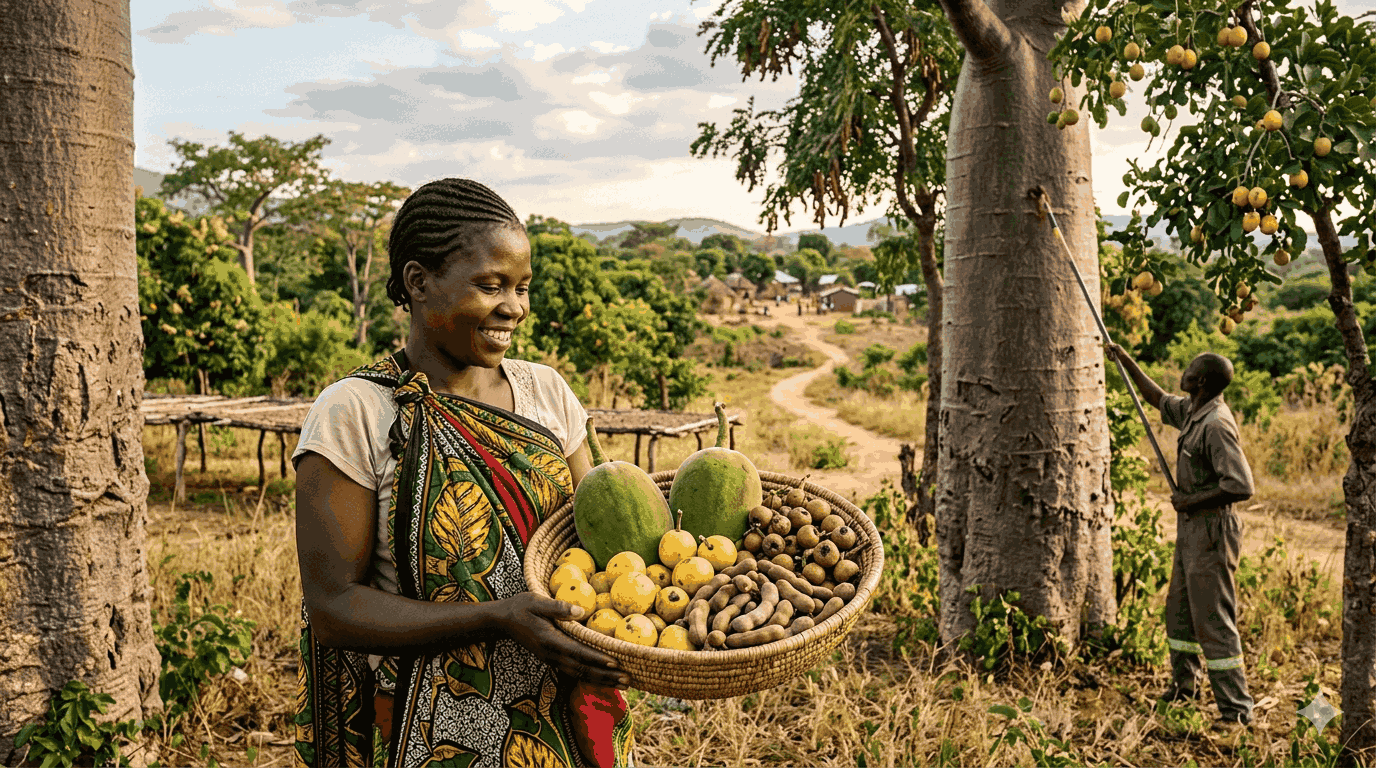
Reviving Africa’s Forgotten Fruit Trees: A Hidden Harvest

The Nutritional Powerhouses Right Beneath Our Feet
Explore the untapped economic and nutritional power of indigenous African fruit trees like Baobab, Marula, and Tamarind.
Indigenous African Fruit Trees are often more nutrient-dense than imported fruits. They grow wild and have deep root systems, helping retain vitamins and minerals in drought.
- The Baobab Tree (Adansonia digitata): Often called the “Tree of Life,” its dry fruit pulp contains six times more Vitamin C than oranges and more calcium than milk.
- The Marula Tree (Sclerocarya birrea): Famous for its tart, vitamin-rich fruit flesh and oil-rich kernels, which are highly sought after by the global cosmetic industry for skin hydration.
- The Wild Medlar (Vangueria infausta): A drought-hardy fruit rich in carbohydrates and essential fatty acids, historically used to combat seasonal food shortages.
Economic Resilience: Turning Wild Harvests into Income
Investing in the preservation and structured harvesting of indigenous African fruit trees offers a sustainable economic safety net for rural communities. Instead of relying solely on temperamental cash crops, wild harvesting provides a secondary income stream that aligns with biodiversity conservation.
| Tree Species | Primary Commercial Use | Nutritional / Market Edge |
|---|---|---|
| Baobab | Powdered pulp, seed oil | High prebiotic fiber & Vitamin C |
| Marula | Liqueurs, cosmetics, cold-pressed oil | Rich in oleic acid and antioxidants |
| Tamarind | Pastes, juices, traditional medicine | Natural preservative & high tartaric acid |
Consumers globally are shifting toward functional foods and wild-harvested ingredients. This pivot opens doors for African agro-enterprises to export processed powders, stable oils, and dried fruit snacks directly to international wellness markets.
Climate Adaptation: Nature-Based Solutions for the Future
Deforestation and agricultural expansion threaten these valuable wild spaces. Protecting and cultivating indigenous trees serves as a critical buffer against desertification.
Integrating Indigenous African Fruit Trees into farming models improves soil structure and water retention.
It also provides essential shade for smaller crops and supports resilient ecosystems.