Free delivery orders above $299 | Coupon code: newyear24 | HAPPY NEW YEAR!
Grade A Ghana Shea Butter: The 2026 Gold Standard

Firstly, discover how modernization and sustainability are transforming Grade A Shea Butter Ghana in Northern Ghana.
Additionally, they shape growing practices and processing methods across the region.
Moreover, farmers, cooperatives, and local suppliers notice clearer standards and steady skilled labor.
Furthermore, communities benefit from training programs and transparent pricing.
Additionally, learn about the 2026 market trends and community impact.
As demand patterns shift, investment grows in local infrastructure.
These changes aim to create jobs, improve incomes, and support families.
Also, the year 2026 will likely see sustained growth across the region.
In many communities across Northern Ghana, livelihoods remain tied to the land and natural resources families depend on for survival. For generations, women have processed shea nuts into butter using traditional methods that could take days for a single batch.
Today, we are witnessing a Modern Shea Revolution that is transforming Grade A Shea Butter Ghana from a labor-intensive craft into a sustainable global powerhouse.
Modernization: Easing the Burden, Improving the Quality
Moreover, Modernization: Easing the Burden, Improving the Quality.
The physical exhaustion of traditional shea processing is being replaced by modern innovation for Grade A Shea Butter Ghana.
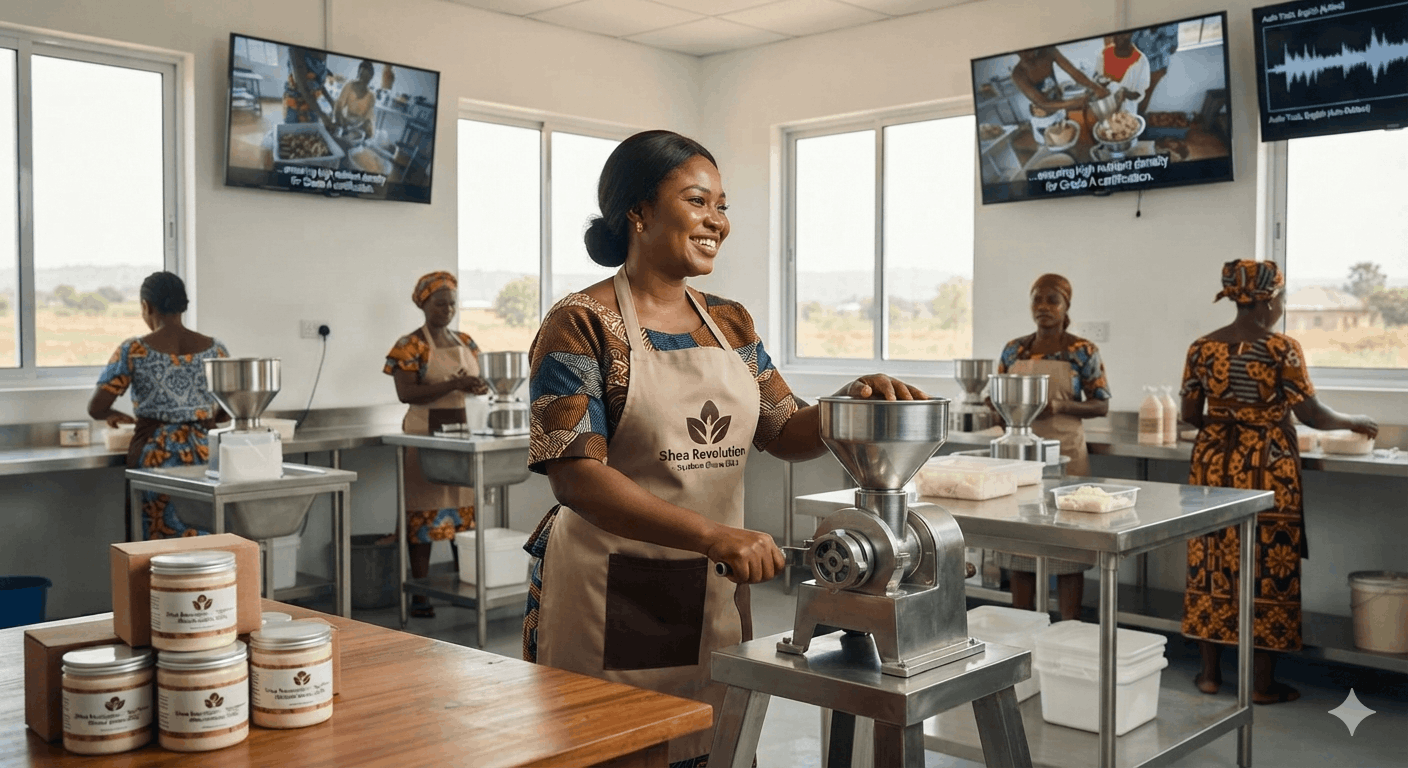
Additionally, in Basyondede and Woriyanga, new facilities with modern grinders and roasters have been handed over to local women.
These facilities are:
- Reducing Processing Time: Allowing women to produce more in less time.
- Ensuring Consistency: Modern equipment helps maintain the high nutrient density required for Grade A certification.
- Empowering Women: Putting women at the center of development and providing them with financial autonomy.
Market Trends: Why 2026 is the Year of Shea
Additionally, market trends show Grade A Shea Butter Ghana is shaping 2026.
The global shea butter market is estimated to reach $2.76 billion in 2026. This growth is driven by a massive shift toward natural and organic ingredients in premium skincare.
| Market Metric | 2026 Projection |
|---|---|
| Global Market Size | $2.76 Billion |
| Grade A Market Share | 41.8% (Lead Segment) |
| Personal Care Share | 60% of total market use |
Moreover, consumers increasingly value “clean-label” formulations, with 74% of shoppers considering organic ingredients vital when purchasing personal care products.
Sustainability: Protecting Ghana’s “Golden Resource”
Sustainability is no longer just a buzzword. It is a survival strategy. Shea trees in West Africa sequester approximately 1.5 million tons of CO2 annually, making them a critical tool in fighting climate change.
Digital innovations are also playing a role.
Companies like Sommalife are digitizing the shea value chain.
Additionally, this helps women farmers connect directly to global markets and adopt climate-smart agricultural practices.
As a result, focusing on nature-based solutions helps Ghana.
It keeps its “gold” a renewable resource for generations.